Electric Go-Kart Battery Life in Commercial Use: The Real Numbers (India 2026)
Most of what's online about electric go-kart batteries is written for hobby karts. A quick search returns articles citing "15-30 minutes per charge" and "replace every two years." Those numbers are correct, for a ₹40,000 consumer kart with a sealed lead-acid battery running at a weekend track. They are wildly wrong for a commercial fleet.
This post covers the numbers that actually matter if you're buying a commercial electric kart fleet in India: runtime per charge, cycle life before replacement, performance over three to five years of daily operation, and what replacement actually costs in rupees.
Runtime Per Charge: Hobby vs Commercial
Hobby karts top out at 30-40 minutes because they run small batteries and lead-acid or low-grade lithium chemistry. Commercial karts need to hold up through peak hours.
| Kart Type | Typical Runtime | Chemistry |
|---|---|---|
| Consumer / hobby kart | 15-30 min | SLA or generic lithium |
| Rental kart (global avg) | 30-45 min | Lithium, low energy density |
| Formula-Zero MK2 | 70 min | Korean EV-grade Li-ion, 260Wh/kg |
| Formula-Zero EK2-X | 100 min | Korean EV-grade Li-ion, 260Wh/kg |
| Formula-Zero TSE | 50 min (two riders) | Korean EV-grade Li-ion, 260Wh/kg |
The EK2-X at 100 minutes under full load is roughly 3x longer than the commercial rental average. That's not chemistry luck. It's a 4.5 kWh pack built around cells that get specified into passenger EVs, not a kids' toy.
Runtime Alone Isn't the Answer. Effective Daily Runtime Is
A kart that runs 100 minutes per charge but takes 4 hours to recharge is worse than a kart that runs 70 minutes and charges in 90 minutes. The number that matters to a track operator is effective daily runtime: how many hours of riding a kart delivers across an operating day.
Three levers move this number:
- Runtime per charge. Longer is better, but only up to the session length. No one books a 100-minute session.
- Charging speed. FlashCharge adds a 10-minute top-up between sessions, so the kart rolls back onto the grid instead of sitting on a charger for an hour.
- QuickSwap. On the MK2, you pull the pack, drop a fresh one in, and the kart is back on track in under 60 seconds. The depleted pack charges in the background while the kart keeps earning.
With FlashCharge, one EK2-X delivers 8-10 hours of on-track time across a 10-hour operating day. With QuickSwap on the MK2, it's closer to 9.5 hours. A conventional Park & Charge imported kart with the same battery sits at 5-6 hours of actual riding. The rest goes to charging windows.
Cycle Life: How Long Before the Battery Stops Holding Charge?
This is where buyers get burned. A battery's "cycle life" is the number of full charge-discharge cycles before capacity drops below 80% of new. Hobby batteries are rated at 300-500 cycles. Consumer EV packs sit at 1,500-2,000 cycles. Commercial-grade cells built for high daily turnover run higher still.
Formula-Zero packs are Korean EV-grade lithium-ion with active BMS thermal management. In typical commercial operation (20 hours of riding per kart per week), that works out to roughly 3-4 years before a pack drops to 80% capacity. At 80% capacity the kart still runs. The runtime just drops from 100 minutes to ~80 minutes on the EK2-X. Most operators replace packs on a rolling schedule between year 3 and year 5.
Compare that to the 5% annual capacity loss number cited by Blue Shock Race. That's consistent with our own fleet data: roughly 15-20% total degradation by year 3, then a slow glide. FZ fleet karts running at Smaaash Mumbai, MIKA Chennai, and PP Karting Kakinada have accumulated over 10 lakh km of combined running without a single thermal runaway or early-life pack failure.
What Accelerates Battery Wear (And How to Avoid It)
Three things kill a commercial kart battery early:
Fast charging without thermal management. Cheap fast chargers dump current without monitoring cell temperature. Every fast charge at high ambient temperature shortens life. Formula-Zero's FlashCharge algorithm monitors pack temp and voltage curves in real time and derates current if the pack is hot.
Deep discharges. Running a pack to 0% repeatedly stresses cells. Our BMS cuts off at 10-15% state of charge and the display warns the driver before that. Operators running Park & Charge models hit this more often because they push runtime to the limit.
Ambient heat. Batteries degrade faster above 40°C cell temperature. Most FZ deployments are indoor (Smaaash, Woop!, MIKA) or shaded outdoor. For uncovered outdoor tracks in Tier 2 cities where April-June ambient hits 45°C, the active BMS thermal management and the 0-45°C charging window keep cells in the safe zone.
Replacement Cost in INR
When the time comes, replacement is cheaper than most operators expect.
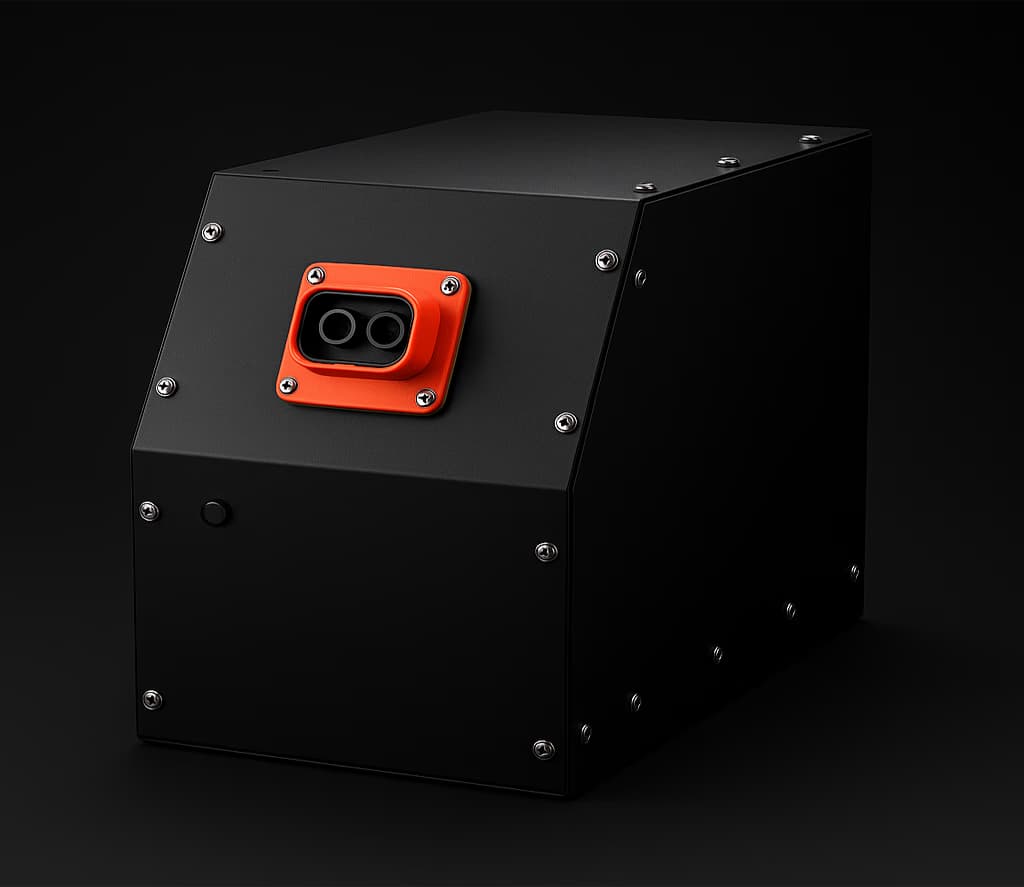
- MK2 spare battery: ₹1,25,000 + GST (list price). Packs are swappable under 60 seconds, so for QuickSwap operations, the spare is also the regular runtime extender.
- EK2-X pack replacement: quote-based, includes BMS inspection and reinstallation. Rough range ₹2-2.5L + GST.
- Recycle/trade-in program: Formula-Zero accepts degraded packs on trade-in against new ones. Cells are recycled into second-life applications and 95%+ of pack materials stay in-circuit.
Amortised over 3-4 years of service, a MK2 battery costs roughly ₹3,000/month per kart. That's less than you spend on petrol for a single kart in one week.
The Bottom Line for Operators
If you're evaluating electric karts for a commercial track in India, the right question isn't "how long does the battery last on one charge." It's two questions:
- How many hours of riding does this kart deliver per day, including charging windows? FZ answers 8-10 with FlashCharge, 9.5+ with QuickSwap.
- How long until I need to replace the pack, and what will it cost? 3-5 years on FZ packs, ₹1.25-2.5L per pack, trade-in available.
Everything else is marketing.
See the EK2-X and MK2 for full specs, or talk to us about fleet pack warranties and AMC structure for your venue.