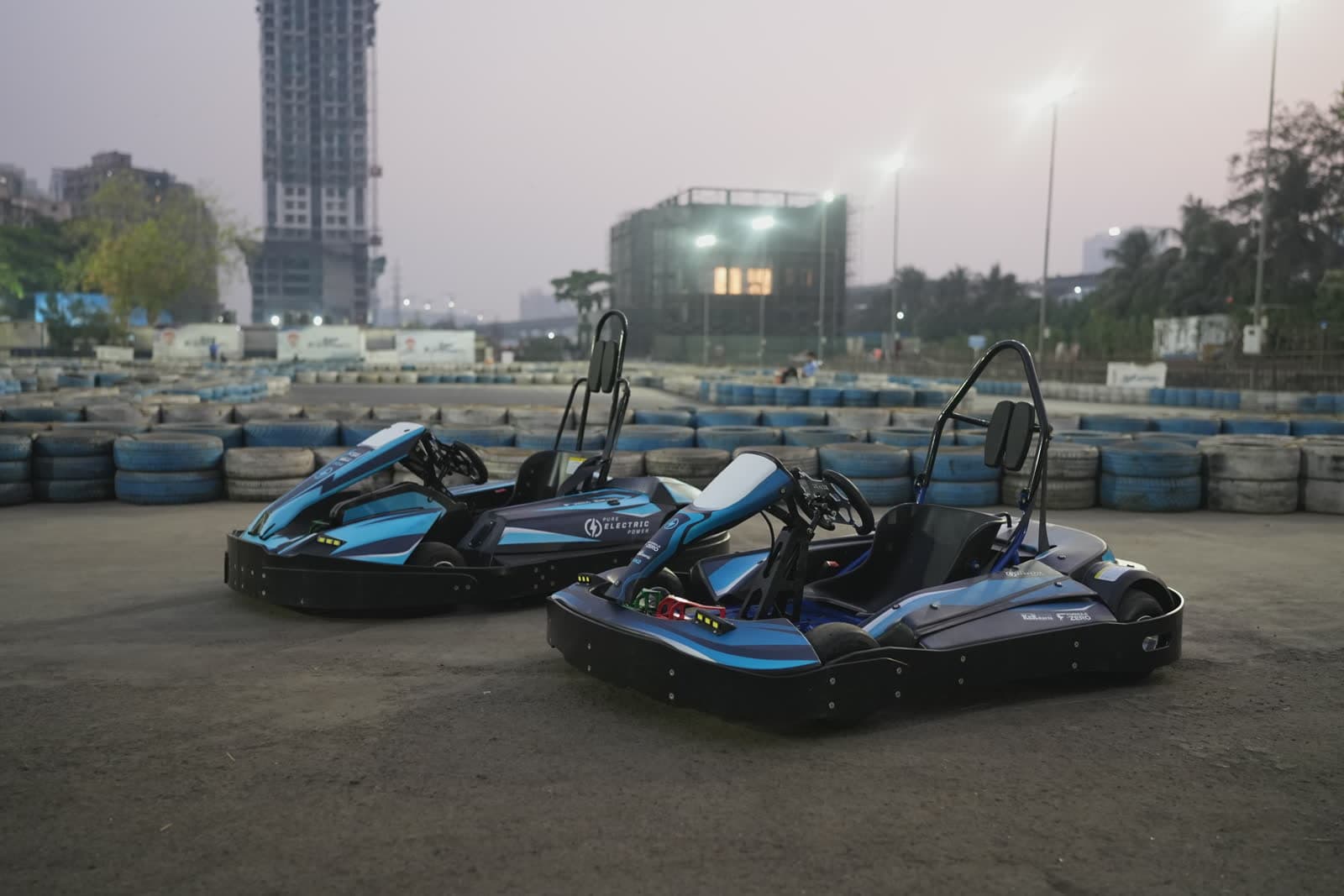
Electric vs Petrol Go-Karts: The Real Cost Difference
Every operator I meet asks about the sticker price first. Fair, that's the cheque they sign on day one. But the cheque on day one is rarely what hurts the business by year two.
Run a 10-kart petrol fleet for two years next to electric on the same duty cycle, you end up about ₹31 Lakh apart. Not a model we built for a pitch deck, this is from operator data across the venues we've worked with. The number holds up across formats, indoor and outdoor, Tier 1 and Tier 2.
Track owners often freeze at the electric sticker price, and honestly, ₹3.6L to ₹5.5L per kart is not small money for someone opening their first venue. So I get the hesitation. The mistake is staring at that one line while the larger lines, the ones that show up month after month, keep moving.
The Numbers That Matter
| Petrol Fleet (10 karts) | Electric Fleet (10 karts) | |
|---|---|---|
| 2-year total cost of ownership | ₹81 Lakh | ₹50 Lakh |
| Operating cost reduction | - | 74% lower |
| Monthly running cost savings | - | 75% |
Petrol fleets leak cash in the obvious place, fuel, and in the boring places operators know too well. Oil changes, spark plugs, carburettor tuning, chain maintenance. One kart going down is annoying. Multiply by 10 karts running 8+ hours a day, it becomes your weekly operating pattern. You're always fixing something.
An electric motor has one moving part. The pack and motor go in, and apart from a brake check and a tyre swap, there's not much waiting on a workshop slot. Which, honestly, is most of the argument right there.
Commercial Tracks: The Real Comparison
If you're running a commercial rental operation in India, petrol becomes hard to justify the moment you stop treating the fleet as a one-time purchase and start treating it as a business asset that has to earn every month. Do the math yourself:
| Petrol Kart | Electric Kart (Formula-Zero) | |
|---|---|---|
| Upfront cost (per kart) | ~₹2.1L | ₹3.6L (MK2) to ₹5.5L (TSE) |
| Monthly running cost | ~₹25,000 | ~₹6,500 |
| Daily cool-down / refuel downtime | 30-60 min | 0 (FlashCharge) or 60 sec (QuickSwap) |
| Indoor-capable | No (emissions, noise) | Yes |
| Speed control per rider | Manual throttle stop | Software, real-time |
| Payback on switch | - | ~3 months from petrol trade-in savings |
| Compliance (fire NOC, ventilation) | Strict, expensive | Standard commercial norms |
"But Petrol Wins on Long Tracks" - Not Anymore
You still see this argument floating around US and UK karting forums. Long outdoor tracks are where petrol holds the edge, electric karts run out of charge before the session is done. That was a fair point in 2019, when half the "commercial" electric karts in the market were really 30-minute hobby builds. It's a different conversation now.
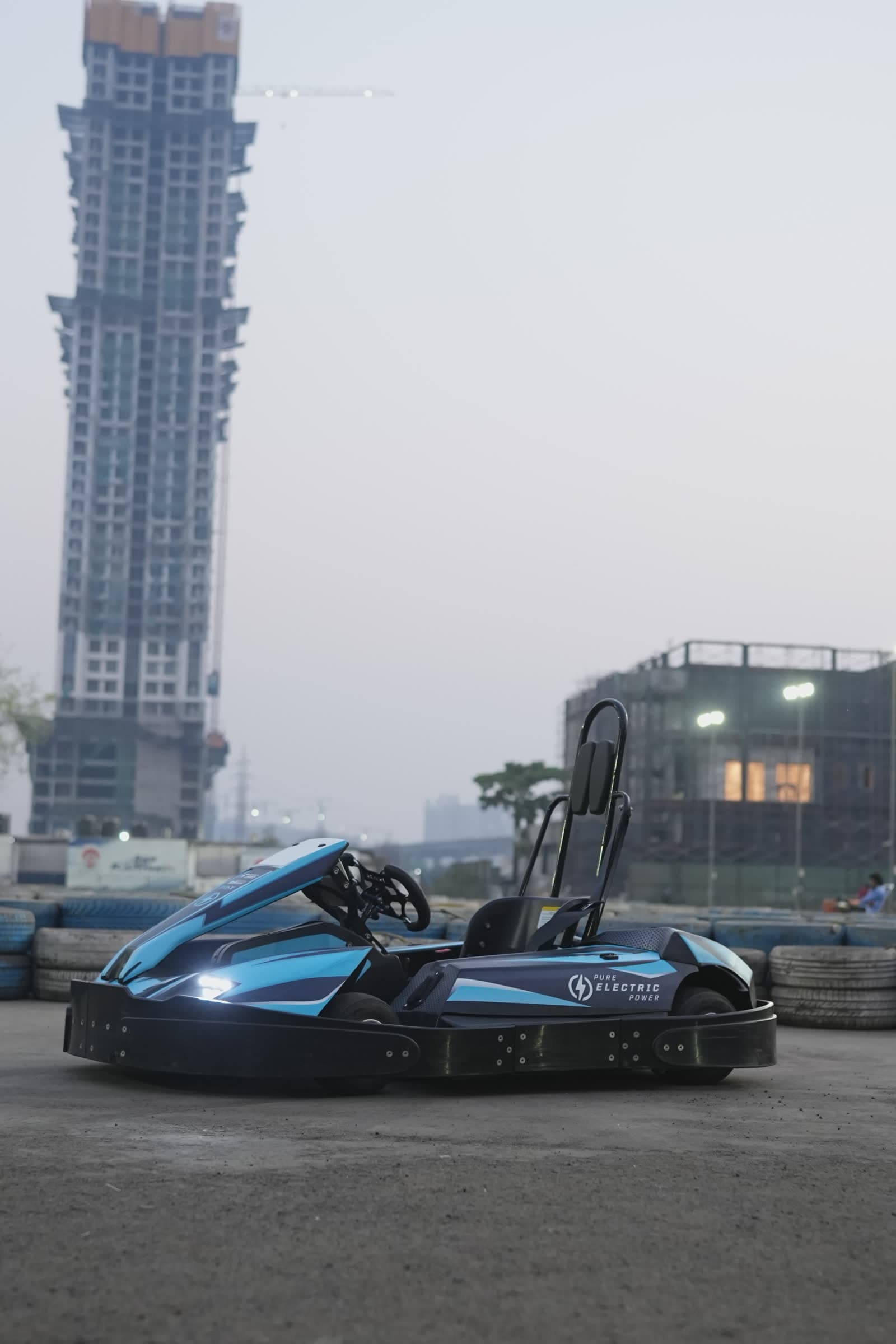
The EK2-X runs 100 minutes at full commercial load, tops out at 80 km/h. FlashCharge adds a 10-minute top-up between sessions, so the kart goes back on the grid instead of sitting in a charging bay while a group of customers waits in the lobby. On longer outdoor layouts, where throughput is basically the whole business case, electric can out-cycle petrol per hour now. No cool-down to manage, no fuel stop to chase, no operator running across the paddock with a jerry can on a Saturday evening.
Karun Chandhok ran the EK2-X at MIKA Chennai. MIKA is a CIK-approved international circuit, not some short indoor loop where electric karts always look fast. He pushed it hard, the runtime held.
Where Electric Wins on Revenue
Costs are the easy half. The bit operators don't always model is revenue, because going electric changes what kind of venue you can even run, and how many paid laps the fleet can do in a day. We've seen operators realise their evening peak was capped by petrol cool-downs, not demand. They were turning customers away while karts sat cooling.
Zero emissions means the fleet can operate inside malls, FECs, entertainment complexes. Petrol brings noise and fumes and ventilation headaches into exactly the places that want clean, predictable guest experiences. So the venue options open up completely.
Throughput improves too. QuickSwap battery changes take under 60 seconds on the MK2, removes the usual charging downtime problem from the operating day. While a petrol fleet is being refuelled or left to cool, the electric fleet is still selling laps.
Customers pay more for electric too, in our experience. The product feels newer, the session is cleaner and quieter. Tracks running the EK2-X, a 10kW kart with 100-minute runtime, charge premium rates and still fill every slot. Which tells you something about what customers actually want.
3-Month Payback
Across our deployed fleet, operators hit ROI in about 3 months. After that the cost savings stop being a payback story and start showing up as margin. Over two years, Formula-Zero clients have generated ₹15 Cr+ in revenue and saved ₹1.1 Cr+ compared to what they would have spent on petrol.
Most operators already know electric is cheaper once they've seen the running-cost sheet. The harder number to sit with is the monthly profit you're not making while the old fleet keeps burning fuel.