Do Electric Go-Karts Overheat in Indian Summers? Battery Thermal Management Explained
The Indian operator's question nobody on international karting blogs answers honestly: does this thing actually work when my track hits 45°C in April, May, and June?
This is a fair question. Most electric karting content on the web is written for UK, EU, or US markets where ambient temperatures cap at 30-35°C and thermal-management discussions stay theoretical. In Ahmedabad, Jaipur, Nagpur, Chennai, and most of Tier 2 India, April to June is another matter. Ambient regularly crosses 42°C. Track-surface temperatures climb higher still. The inside of an unventilated pit can exceed 50°C on a bad afternoon.
If the battery can't handle that, the whole business case collapses. Here's what actually happens under the bodywork.
Why Batteries Care About Temperature
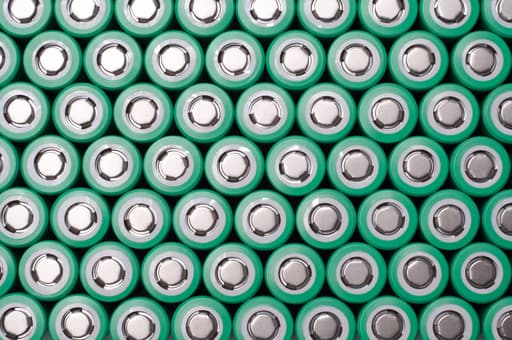
Lithium-ion cells have a narrow comfort zone. The industry standard, cited consistently by Blue Shock Race, Shockt, and every commercial battery vendor, is 20-40°C as the optimal operating range. Above 40°C cell temperature, three things start to go wrong:
- Accelerated capacity degradation. Each 10°C above 25°C roughly doubles the rate at which cells lose their long-term capacity. A pack run consistently at 45°C cell temperature loses 80% of its cycle life.
- Risk of thermal runaway. At pack temperatures near 70-80°C (rare, but possible in poorly managed cheap packs), a single cell failure can cascade.
- Reduced instantaneous power delivery. Above 45°C the BMS typically starts derating output to protect cells. The driver experiences this as "the kart feels slower."
The key clarification is cell temperature is not ambient temperature. A 45°C ambient day does not mean 45°C cells. What the pack temperature actually reaches depends on three things: battery chemistry, enclosure design, and active thermal management.
The Formula-Zero Thermal Envelope
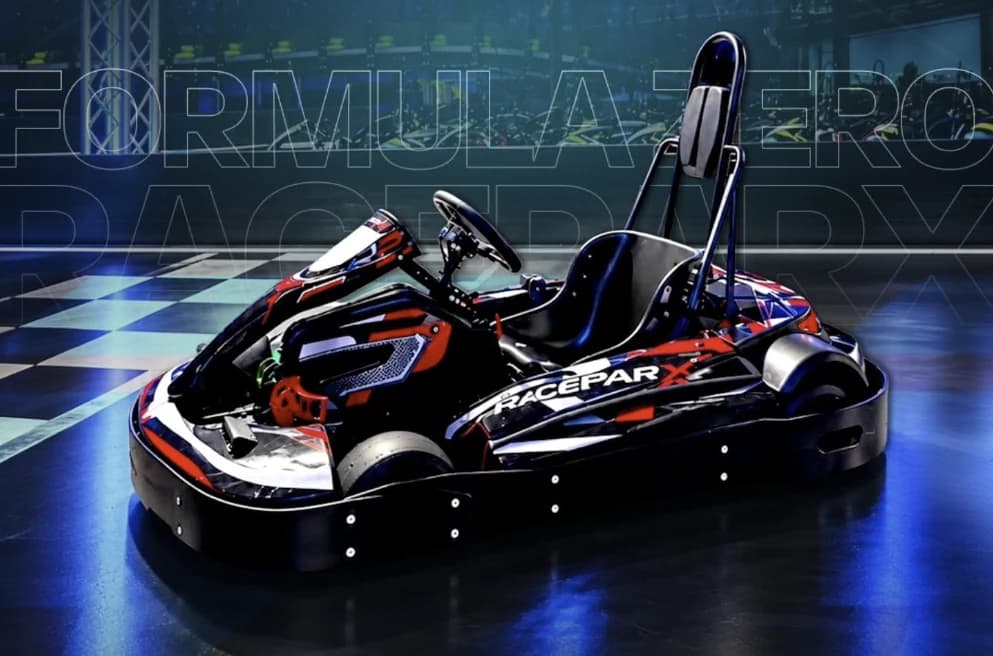
Spec-sheet numbers on Formula-Zero commercial karts:
- Operating temperature range (EK2-X): 10-45°C ambient
- Charging temperature range: 0-45°C ambient
- Cell chemistry: Korean EV-grade lithium-ion, 260Wh/kg
The 45°C upper bound is the ambient spec, not a cell limit. Meaning: the BMS is engineered to hold cells safely below critical temperatures when ambient is 45°C and the kart is under continuous 10kW commercial duty cycle. That's the Indian-summer scenario, specified as a condition the kart must operate in, not a corner case.
What Active BMS Thermal Management Actually Does
Every FZ pack runs a Battery Management System that continuously monitors individual cell temperature, pack voltage, current draw, and state of charge. Three behaviours matter for Indian summer operation:
1. Real-time charge rate adjustment. FlashCharge algorithms don't blindly dump current. If pack temperature is high, charge current is automatically reduced. The 10-minute top-up might take 11 or 12 minutes on a 44°C day, but cell integrity is preserved and the pack doesn't go into thermal shutdown.
2. Output derating before damage. If cells approach their thermal limit during a session, the BMS smoothly reduces motor output by small increments rather than cutting off sharply. Drivers get slightly fewer peak bursts; the kart keeps running; cells don't get stressed past the point where they lose cycle life.
3. Pack-level thermal design. The crashproof battery enclosure on all FZ karts is engineered for heat dissipation, not just impact. Cell spacing, internal air paths, and housing material are chosen to move heat out of the pack. This is basic commercial-grade battery engineering that's often skipped on hobby karts.
Real-World Operating Data
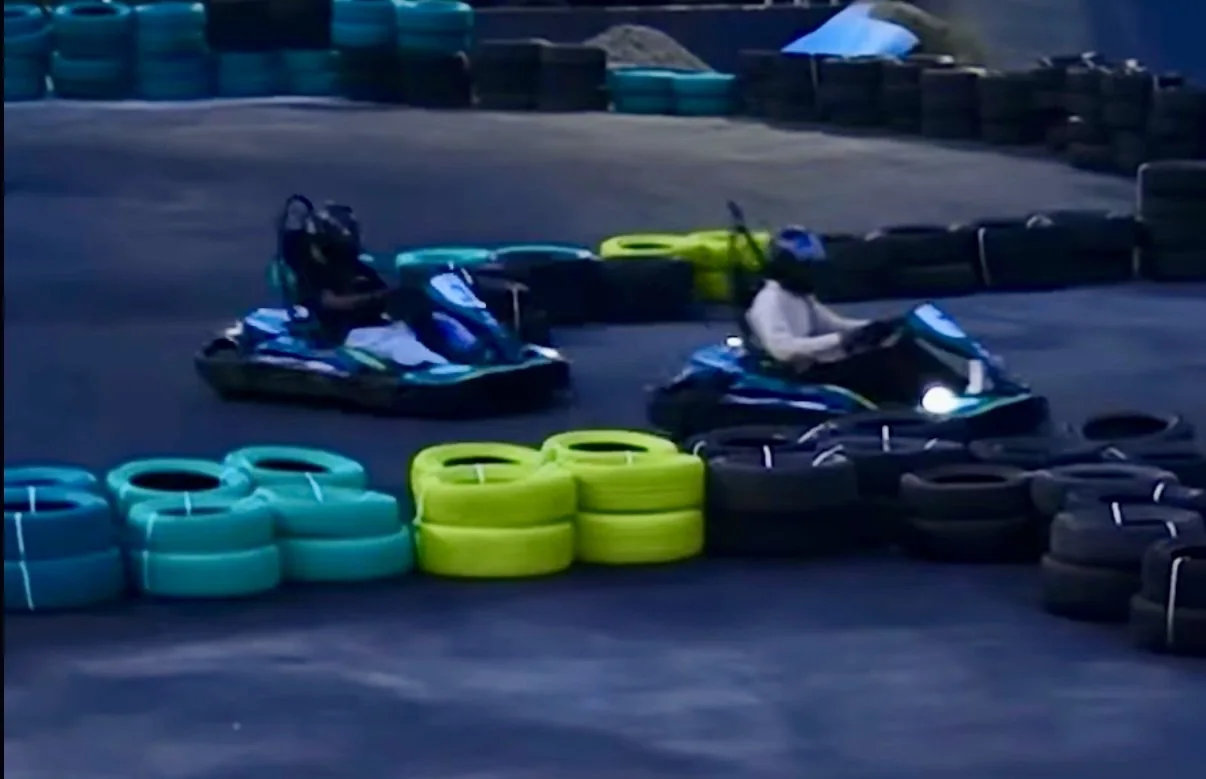
Formula-Zero karts are deployed year-round in venues across India: Smaaash Mumbai (indoor, climate-controlled), MIKA Chennai (partially shaded outdoor, Chennai hits 40°C+ in April-June), Woop! Bengaluru (indoor), PP Karting Kakinada (indoor mall). Across the combined fleet, we've logged more than 10 lakh km of operation including through three Indian summers.
Observations from that deployment:
- Zero thermal runaway events across the entire fleet
- Zero packs that failed due to heat-related capacity loss in their first 24 months
- Normal summer operations at the outdoor/partially-covered venues with no unusual downtime
- FlashCharge times extend by 1-2 minutes on the hottest afternoons, well within commercial tolerance
Practical Operating Guidance for Indian Tracks
For outdoor tracks and uncovered pits in summer cities, a few inexpensive operational practices extend pack life significantly:
- Shade the pit area. A simple tensile shade structure over the charging/swap zone drops ambient by 5-8°C and extends cell life measurably. The cost is tiny; the benefit is years of added pack life.
- Store spare batteries indoors or in a shaded cabinet. Never leave a spare pack in direct sun.
- Don't schedule peak sessions during 1-4 PM in April-June. If your venue is fully outdoor, lean pricing toward morning and evening windows. This is good business advice as well as good battery advice. Customer comfort matters.
- Run a mid-afternoon "maintenance pause" in summer. 30-45 minutes of downtime in the hottest window lets pack temperatures drop back toward optimal before evening rush.
None of these are required for safe operation. The packs are specified to handle 45°C ambient without them. They are optimisations that reduce pack stress and extend replacement timelines from 3-4 years toward 4-5 years.
The Bottom Line
Indian summers are a real environment, not an edge case. Formula-Zero commercial karts are specified and deployed to operate through them. The BMS, the cell chemistry, the enclosure design, and the FlashCharge algorithms were designed knowing that Indian April-June means 42-45°C ambient and that commercial operations can't pause for the season.
If a vendor can't quote a 45°C ambient operating spec, assume they're selling you a kart designed for 30°C weather. If the spec sheet is silent on thermal management, there probably isn't any worth mentioning.
For the full battery spec and thermal design details across the lineup, see the EK2-X, MK2, TSE, and Gen-Z product pages. Or talk to us about the specific thermal conditions at your venue, and we'll tell you exactly what to expect.
Related reading: