The Market Is Wide Open
India has fewer than 200 commercial karting tracks serving 1.4 billion people. Italy has 300+ for 60 million. The demand is real, the supply is thin, and the operators who move first in Tier 1 and Tier 2 cities will lock in their markets.
Karting Track Investment in India: The Full-Picture Numbers
Before you start talking to architects, set the budget. Here is what a karting track actually costs in India in 2026:
| Format | Total Investment | Track Build | Fleet (10 karts) | Fit-out / Site |
|---|---|---|---|---|
| Entry indoor (Tier 2 city, 15,000 sq ft) | ₹1.5-2 Cr | ₹40-60L | ₹35-50L | ₹60-90L |
| Mid-size indoor (Tier 1 city, 25,000 sq ft) | ₹2-3.5 Cr | ₹60-90L | ₹50-75L (12-15 karts) | ₹1-2 Cr |
| Outdoor (Tier 2/3 city, 1-2 acres) | ₹75L-2 Cr | ₹30-60L | ₹35-75L | ₹20-60L (land excluded) |
These ranges assume a fleet of Formula-Zero electric karts. Petrol fleets shave ~₹15L off the kart line but add ₹3-5L/month to running costs, which erases the saving in year one. Land and major civil work are separate. If you are acquiring land, add that on top.
Licensing, insurance, and a 10-15% contingency are not optional. Budget them in or you will find them the hard way.
Location and Format: Start With the Numbers
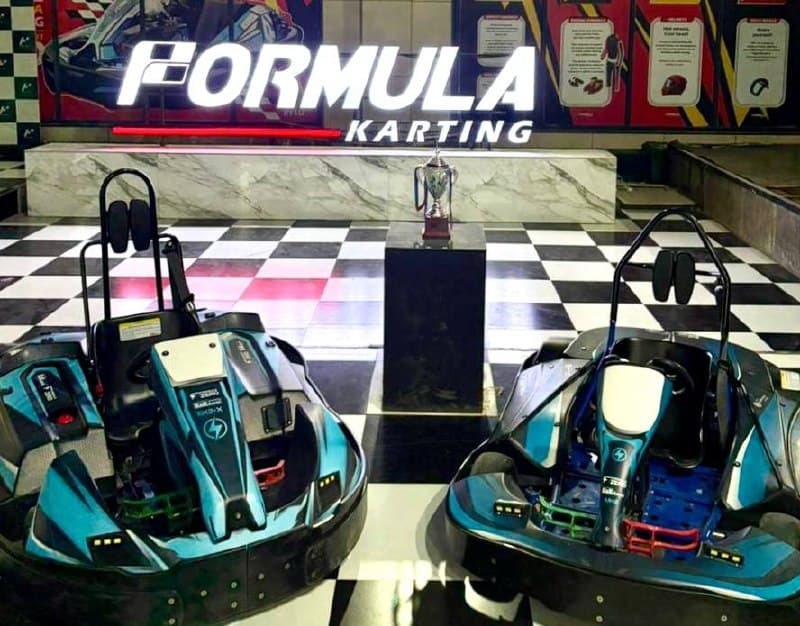
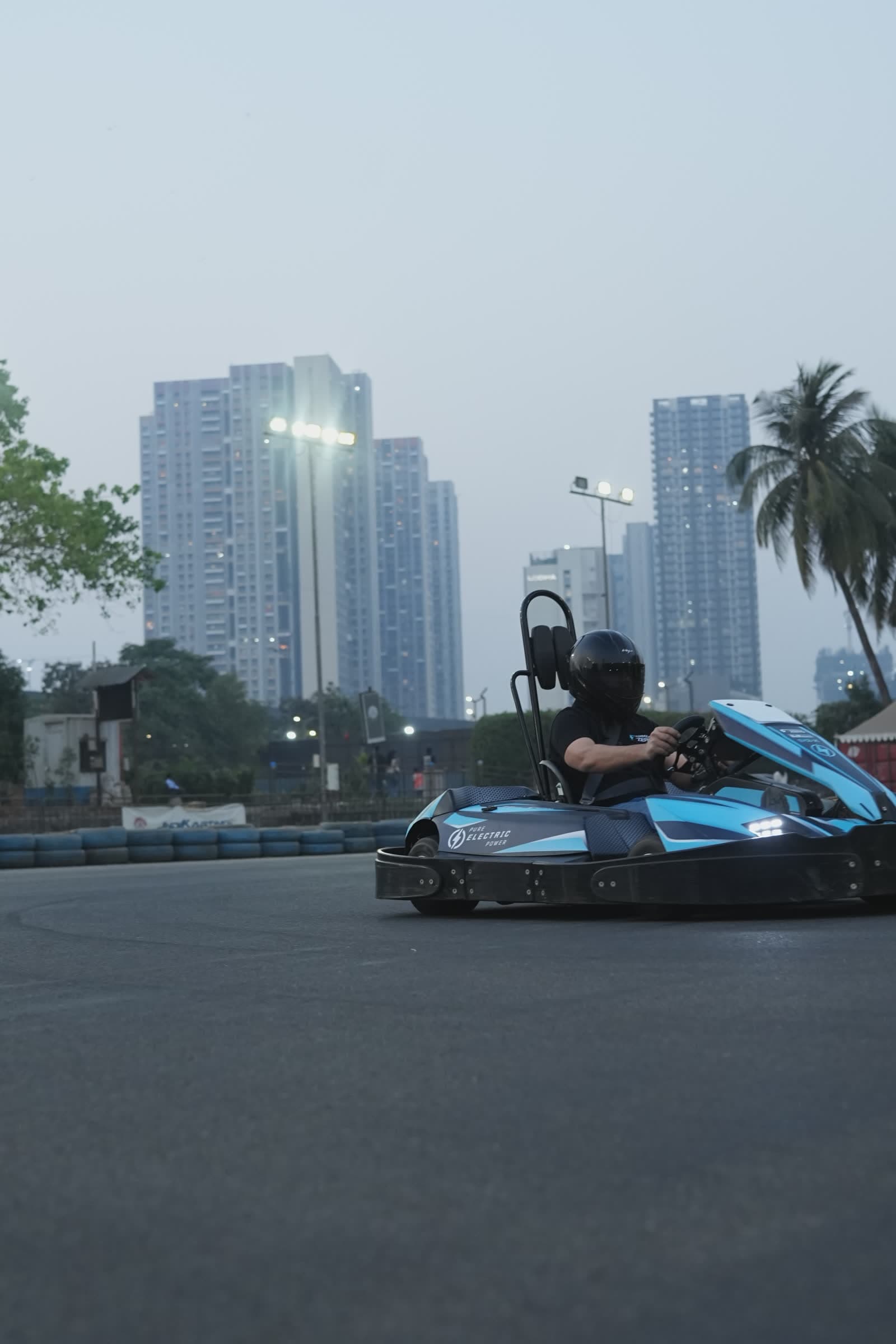
Indoor tracks need 15,000-25,000 sq ft of covered space. Outdoor tracks need 1-2 acres minimum. Indoor works better in metros where real estate is expensive but footfall is guaranteed. Outdoor suits cities where land costs are lower and you can build a longer, more exciting layout.
The format decision drives everything: construction cost, fleet size, kart type, and revenue model. An indoor track in Bengaluru with 8-10 karts running 8-minute sessions at ₹500-800 per ride generates ₹40-60 lakh monthly. An outdoor track in a Tier 2 city with 12-15 karts at ₹300-500 per ride targets ₹25-40 lakh. Both work. Pick the model that fits your market.
Fleet Selection: Electric Changes the Math
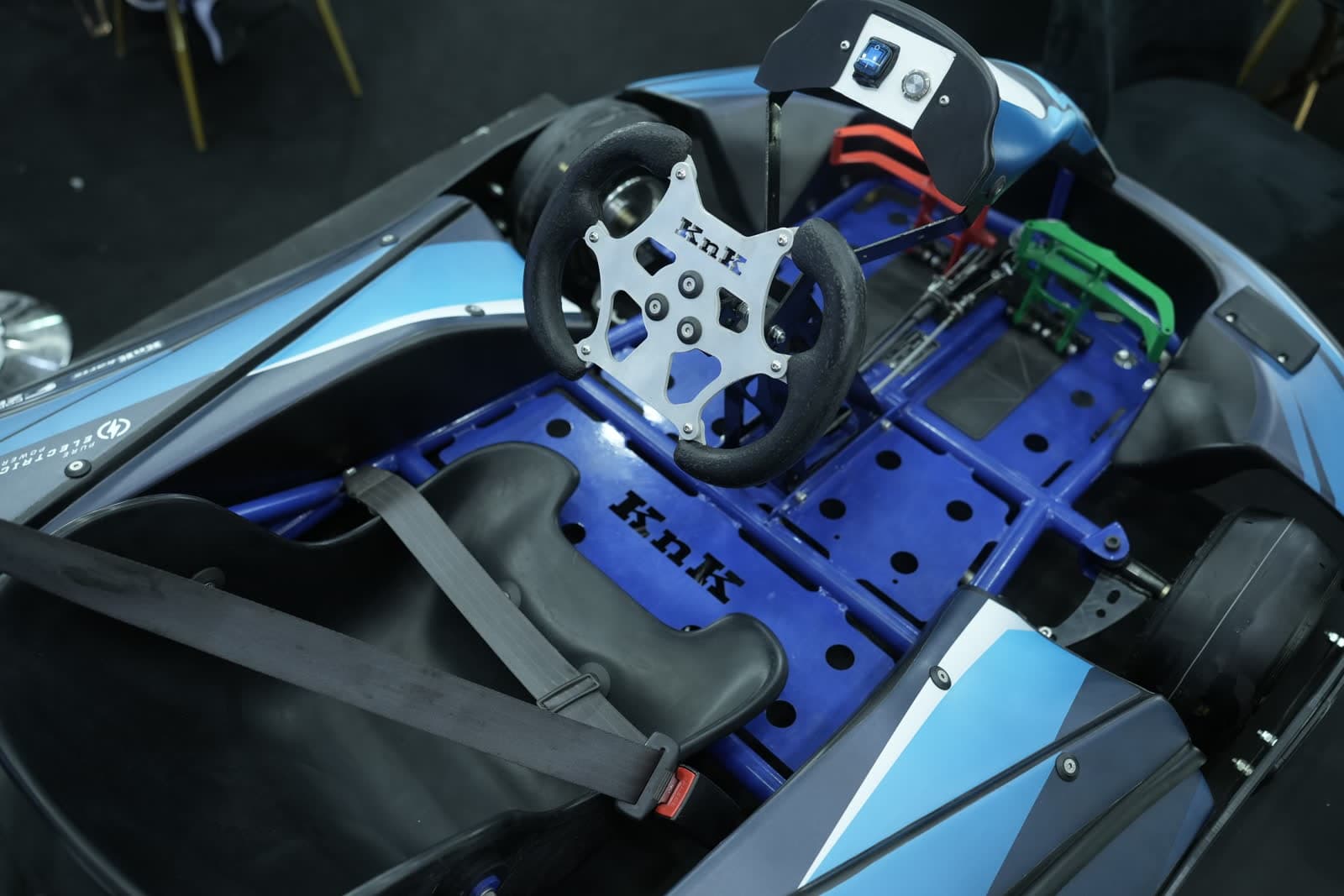
Petrol karts cost less upfront but bleed money on fuel, maintenance, and downtime. A 10-kart petrol fleet burns ₹2.5 lakh monthly on fuel alone. Electric karts eliminate that line item entirely. Running costs for a 10-kart electric fleet come to ₹65,000 per month in running costs (electricity plus minor maintenance).
Electric also means faster turnaround. No refuelling stops, less mechanical failure, and software-controlled speed profiles that let you run junior sessions, beginner sessions, and pro sessions on the same fleet. More session types means more customers means higher utilization. Run the full comparison on our ROI calculator.
Infrastructure Essentials
Beyond the track surface and barriers, plan for: a pit area with charging stations, a reception and briefing zone, a timing system, safety gear storage, and spectator seating. For electric karts with FlashCharge technology, your pit area needs standard 15A power outlets. No special high-voltage infrastructure required.
Licensing and Compliance
You will need: a trade license from the local municipal body, fire NOC (especially for indoor venues), public liability insurance, GST registration, Shops & Establishments Act registration, and potentially an amusement ride license depending on your state. Tamil Nadu and Karnataka have the clearest frameworks. FMSCI affiliation is optional for rental tracks but opens competitive event revenue if you add it. Start the licensing process in parallel with construction, not after.
The 3-Month Payback Fleet
With the right fleet economics, your karts pay for themselves in 90 days. After that, every session is margin. A fleet of 10 Formula-Zero electric karts running at 60% utilization generates enough revenue to cover the full kart investment within the first quarter. The track, the real estate, the fit-out take longer. But the karts start printing money almost immediately.
Ready to plan your track? Talk to our team for a site assessment and customized fleet recommendation for your market.