How to Start a Go-Karting Business in India: 2026 Complete Guide (With INR Numbers)
The Indian karting market is sitting at a rare inflection. Fewer than 200 commercial tracks serve 1.4 billion people. CSML projects the market growing from ₹300 Cr today to ₹1,000 Cr by 2030. Tier 1 metros still have room, and Tier 2 cities are almost entirely unserved.
This is the complete playbook for opening a commercial karting track in India in 2026. Investment ranges in rupees. Licenses. Fleet sizing. Revenue expectations. Written for operators who plan to own the business, not franchise someone else's.
Step 1: Pick Your Format Before You Pick Your City
There are three viable formats in India. Pick one and commit. Mixed-format venues get expensive fast.
| Format | Space | Investment | Target Revenue |
|---|---|---|---|
| Mall-integrated indoor (FEC anchor) | 12,000-18,000 sq ft | ₹1.2-2 Cr | ₹25-45L/month |
| Standalone indoor (dedicated building) | 20,000-30,000 sq ft | ₹2-3.5 Cr | ₹40-70L/month |
| Outdoor track (own/lease land) | 1-2 acres | ₹75L-2 Cr (excl. land) | ₹20-40L/month |
The mall-integrated model is gaining fastest because it inherits footfall. Smaaash and Woop! both operate this way. The standalone model works for pure-karting destinations in metros where real estate can support the scale. Outdoor works in Tier 2/3 cities where land is affordable and the target is racing-serious customers willing to travel.
Step 2: Investment Breakdown. Where the Money Actually Goes
For a representative mid-size indoor track (25,000 sq ft, 12-kart fleet) in a Tier 1 city, the ₹2-3 Cr total breaks down roughly like this:
| Line Item | Amount | Notes |
|---|---|---|
| Kart fleet (12 Formula-Zero, mixed EK2-X + MK2) | Quote on request | Varies by configuration; includes chargers, spare batteries |
| Track construction (surface, barriers, drainage) | ₹50-80L | HDPE barriers, polished concrete or asphalt |
| Interior fit-out (reception, pits, viewing, café) | ₹60L-1 Cr | Highly variable by building condition |
| Electrical upgrade (15-30A circuits for charging) | ₹8-12L | Standard commercial, no HV needed |
| Safety gear (50 helmets, suits, balaclavas) | ₹6-10L | Restock budget separate |
| Timing system (RaceFacer or equivalent) | ₹4-8L | Transponder-based, software-licensed |
| POS / booking system + signage | ₹5-10L | Custom booking portal if needed |
| Licenses, insurance, legal, GST registration | ₹3-6L | Not optional |
| Working capital (3 months opex) | ₹20-30L | Runway until you hit breakeven |
| Contingency (10-15%) | ₹20-40L | Do not skip this line |
The kart fleet is often the smallest line on the budget but the single biggest driver of revenue and operating cost. Cheap karts don't just break. They suppress your revenue ceiling because you can't run premium sessions or justify premium pricing.
Step 3: Licenses, Compliance, and Registration
Every single track in India needs these. Start the paperwork in parallel with construction, not after.
| License / Registration | Authority | Timeline |
|---|---|---|
| Company incorporation (Pvt Ltd recommended) | MCA | 10-15 days |
| GST registration | GST portal | 7-10 days |
| Trade license | Local municipal body | 30-60 days |
| Shops & Establishments Act registration | State labour department | 15-30 days |
| Fire NOC (mandatory for indoor) | State Fire & Emergency Services | 30-90 days |
| Public liability insurance | Any major insurer | 5-10 days |
| Amusement ride license (some states) | State tourism / labour | Variable |
| FMSCI affiliation (optional, racing events) | FMSCI | 30-60 days |
Tamil Nadu, Karnataka, and Maharashtra have the most predictable licensing pathways. Delhi-NCR is workable but slower. Avoid building ahead of the fire NOC. An unfavourable inspection after civil work is complete can force expensive retrofits.
Public liability insurance is non-negotiable. Budget ₹40,000-70,000/year for a ₹1-2 Cr cover. Make sure the policy explicitly covers go-karting; generic commercial policies often exclude it.
Step 4: Fleet Selection. Match Karts to Your Venue
The biggest mistake first-time operators make is buying a single-model fleet. Different customers want different experiences, and a homogeneous fleet leaves money on the table.
A recommended mixed fleet for a 12-kart indoor track in a Tier 1 city:
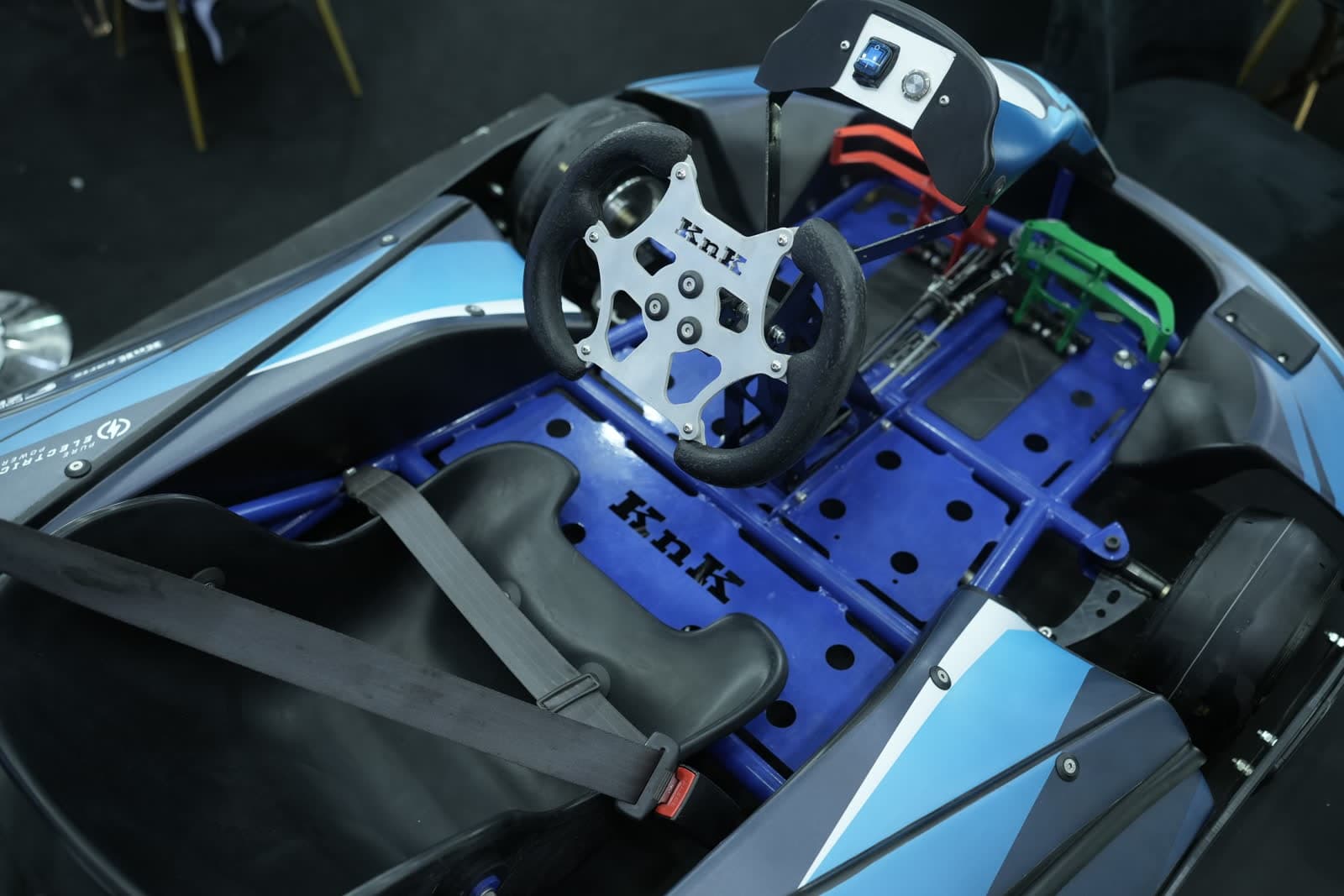
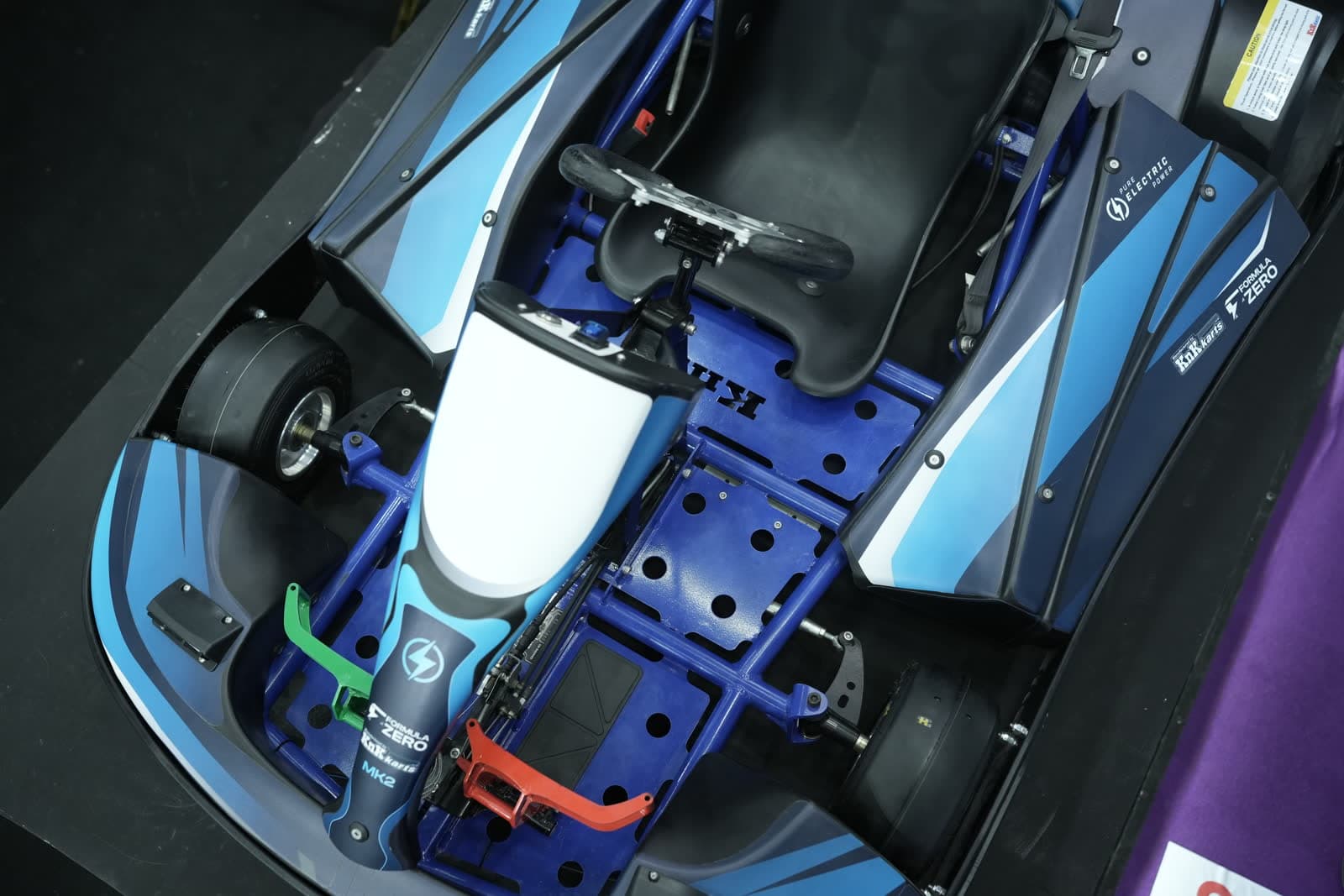
- 6× Formula-Zero EK2-X: premium adult experience, 80 km/h, 100-min runtime. Anchors your premium pricing (₹600-900 per session).
- 4× Formula-Zero MK2: QuickSwap workhorses for peak-hour volume. Keep the fleet active through rush (₹400-600 per session).
- 2× Formula-Zero Gen-Z: junior karts for ages 5-10. Capture the weekend family market (₹300-500 per session).
For a family-entertainment venue, replace one or two adult karts with Formula-Zero TSE twin-seaters, the only commercial electric twin-seater in India. Each TSE doubles revenue per session by bringing non-drivers onto the track (parent-child, couples, first-timers).
Full specs on the products page. Or read what to look for when buying commercial go-karts for the criteria that actually matter.
Step 5: Revenue Model and Unit Economics
For an indoor track running 12 karts, 10 hours per operating day, at 60% utilization:
- Sessions per day: 72-96 (8-minute sessions, 6-8 karts per heat)
- Riders per day: 430-580
- Average ticket: ₹500-700 per rider
- Daily revenue: ₹2-4L
- Monthly revenue: ₹60L-1 Cr (peak) / ₹40-60L (steady state)
Unit economics on Formula-Zero electric:
- Fleet operating cost: ~₹6,500/kart/month × 12 = ₹78,000/month
- Rent (Tier 1 indoor): ₹3-7L/month
- Staff (4-6 people): ₹1.5-3L/month
- Insurance, utilities, marketing: ₹1-2L/month
- Total monthly opex: ~₹6-13L
At ₹40L/month revenue and ₹10L/month opex, contribution margin is ~₹30L/month or 75%. After depreciation and capex servicing, operating profit lands in the 25-40% range, broadly in line with CSML's public guidance for their franchise operators.
Step 6: Breakeven Timeline
With a well-executed 12-kart indoor track in a Tier 1 city:
- Months 1-3: Soft launch. Build local awareness. Revenue ramps to 40-60% of target.
- Months 4-6: Full operational rhythm. Corporate events, birthday bookings, leagues kick in.
- Month 8-14: Full investment recovery (excluding real estate) depending on utilization.
- Year 2+: Steady-state operation. Operating margins of 30-40%. Reinvestment window opens.
The Formula-Zero fleet specifically pays itself back in ~3 months at 60% utilization, because the 74% operating cost reduction vs petrol flows straight to the bottom line.
Step 7: What the Franchise Pitches Don't Tell You
CSML, 360 Karting, and similar franchise operators pitch hard to greenfield investors right now. The numbers sound good on the surface. Here is what actually happens:
- Revenue splits. The industry standard 360 Karting franchise models run 30/70, 50/50, or 60/40 operator/franchise. You pay a premium to use their brand and buy their kart lineup.
- Supply lock-in. Franchise models require you to buy their kart brand (typically Sodikart or similar imports). Spare parts, pricing, and upgrade cadence are not your choice.
- No goodwill equity. You build local brand recognition for 5-10 years, then rebranding costs are yours if you exit the franchise.
Running your own brand with the right hardware supplier and operations playbook usually produces 10-20% higher net margins over a 5-year horizon. The trade-off is you do your own marketing and do not inherit a brand.
Step 8: First Customer Acquisition (Month 0-3)
Do not spend your capex on digital ads in month 1. Local execution beats paid media for the first quarter.
- Soft-open week for local media and influencer invites.
- Direct outreach to 20-30 corporate HR teams within 5 km for team-building packages.
- Birthday-party sales via mall footfall traffic and nearby schools.
- Standing offer to local go-karting enthusiast groups on social media.
- Google Business Profile set up and optimised before opening day.
Paid acquisition kicks in at month 3 once organic word-of-mouth plateaus.
Ready to Run the Numbers for Your Venue?
Use the Formula-Zero ROI calculator to model revenue, opex, and breakeven for your specific city, format, and fleet mix. Or talk to us directly. We work with operators from planning through site assessment, fleet recommendation, installation, and ongoing support.
Related reading: